Supporting returning families and children with essential health and nutrition services in Herat
For families returning to Afghanistan after displacement, the journey does not end when they cross the border. Children may arrive after difficult journeys and face increased risks of illness, malnutrition and psychosocial stress, while families may also need support to access essential services. At Islam Qala in Herat, AADA is supporting returning families with essential health, nutrition and psychosocial services.
A FAMILY’S EXPERIENCE OF RETURN
At Islam Qala, Mr. Faiz Ahmad described his experience after returning from Iran with his family. After arriving at the Zero Point, he and his family received health and nutrition services, including vaccination and nutrition support. His experience provides a human perspective on the importance of making essential services available to families soon after return.
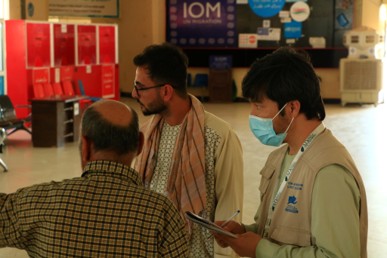
AADA staff interview Mr. Faiz Ahmad, a recently returned Afghan from Iran, at the Islam Qala zero point in Herat in 31 Augst 2026. According to the field information provided, Mr. Faiz Ahmad and his family received health and nutrition services after arrival. He said “I am very happy. We received health services here. All of my family members were sick, and now we feel good and happy.”
In Herat, AADA is supporting communities affected by return movements through the health and Nutrition programs. DAWAM-supported health and nutrition services cover communities in Shindand, Farsi and Gulran, helping returning families and host communities access essential care.
AADA’s Response in Numbers
From March 2025 to August 2026, AADA’s program in Herat reached 311,909 people with essential services and community-based support. This included 37,749 people who received health services and 7,646 people who received psychosocial support.
Children were an important part of the response. During the reporting period, 10,220 children under 18 received health services, including 4,929 girls and 5,291 boys, while 1,125 children received psychosocial support, including 1,042 girls and 83 boys.
A further 233,536 people were reached through awareness activities under an indicator covering IDPs, returnees and communities.
Children’s Health and Nutrition at Islam Qala
Children are a central part of AADA’s response at the Islam Qala Zero Point. AADA provides nutrition screening and services for children under five arriving from Iran. Children are assessed for acute malnutrition, and those diagnosed with malnutrition receive appropriate treatment and follow-up through available nutrition services. Health teams also provide vaccination and other essential health services to help identify and address health needs among children soon after their arrival.
Ali Omar is screened using a MUAC tape as part of nutrition services at a Zero point in Islam Qala, Herat and he has been diagnosed with sever Acute Malnutrition.
Health Concerns Among Returning Children
Children are a central part of the response. AADA’s programme data show that 10,220 children under 18 received health services and 1,125 children under 18 received psychosocial support during the reporting period.
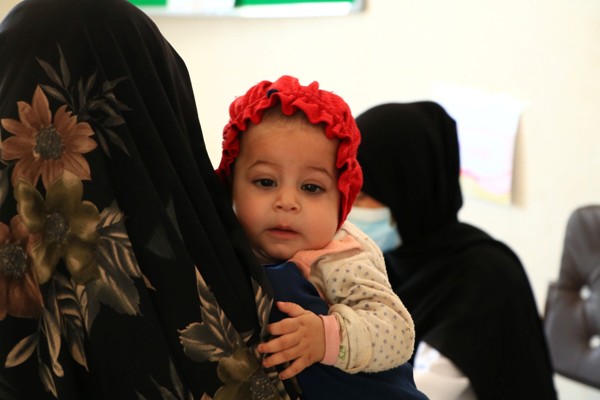
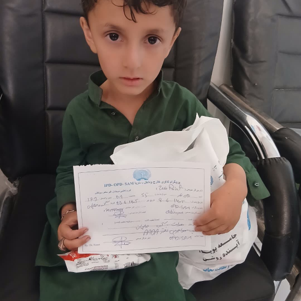
A mother holds a young child at a health and nutrition service setting in Islam Qala Zero Point Herat.
Dr. Nazir Ahmad Tahiri, Medical Doctor, highlighted that trauma and diarrheal diseases are among the common health problems observed among children returning from Iran. Children arriving at the border may require immediate assessment, treatment, vaccination and follow-up care.
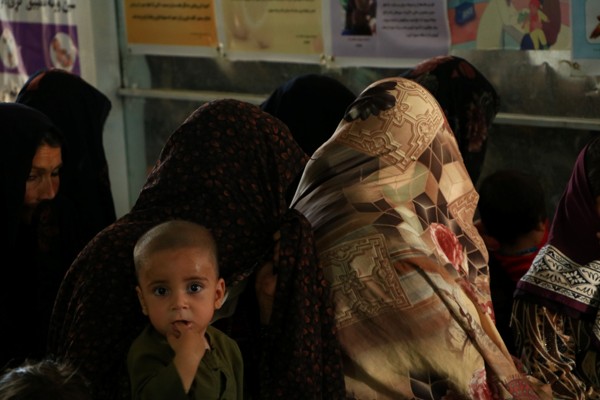
Mothers and children gather at a health and nutrition service setting at Islam Qala Zero Point, Herat.
As returning families rebuild their lives, maintaining access to essential health and nutrition services is critical for children and families. Through DAWAM, AADA continues to support access to these services in vulnerable communities across Herat.