In the remote communities of Herat Province, a quiet but powerful change is taking root.
For too long, many mothers and caregivers lacked the knowledge to recognize the early
warning signs of malnutrition. Children often became dangerously ill before receiving
medical assistance, increasing their risk of severe health complications and long-term
developmental challenges.
Thanks to a dedicated project funded by the Afghanistan Humanitarian Fund (AHF),
this situation is transforming. The initiative,
“Provision of Curative and Preventive Life-Saving Nutritional Services to Children
Under Five Years of Age and Pregnant and Breastfeeding Women Living in High-Priority
Districts of Herat,” has brought essential nutrition services directly to the
doorsteps of those who need them most.
A Community-Driven Approach Across Eight Districts
From September 2025 to May 2026, the AADA team implemented a comprehensive community-based nutrition program through 12 Daycare Centers (DCCs) across eight high-priority districts of Herat Province: Ghoryan, Gulran, Guzara, Kushk-e-Kuhna, Obe, Pashtun Zarghun, Injil, and Zindajan. The strategy was simple yet transformative: empower caregivers with the knowledge, skills, and confidence to actively protect and improve their children’s nutritional health. Community Nutrition Promoters became the driving force behind this mission, working closely with local families to build trust, raise awareness, and encourage healthier practices through 1,826 community mobilization sessions, reaching 17,650 community members.
Key nutrition messages included:
- Optimal child nutrition and infant feeding practices.
- The importance of hygiene and disease prevention.
- Recognizing the early warning signs of malnutrition.
and “Now I know how to identify malnutrition before it becomes dangerous,” , says one mother who participated in the program a sentiment echoed by many families across Ghoryan, Gulran, Guzara, Kushk-e-Kuhna, Obe, Pashtun Zarghun, Injil, and Zindajan, who have gained new confidence in protecting their children’s health.
Tangible Results and Lasting Impact
The project delivered measurable improvements in community nutrition and early detection of malnutrition.- 4,778 families received home visits from Community Nutrition Promoters.
- 12,336 children under five years of age were screened for malnutrition.
- Early identification enabled vulnerable children to be referred promptly for appropriate nutrition services before their conditions became severe.
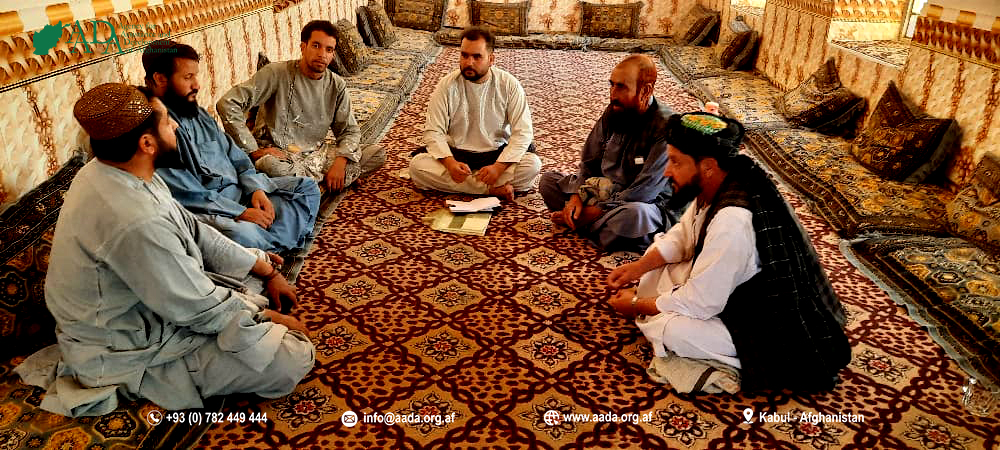
Sarab DCC, meeting with community elders to gain support for mobilization sessions and active screening.
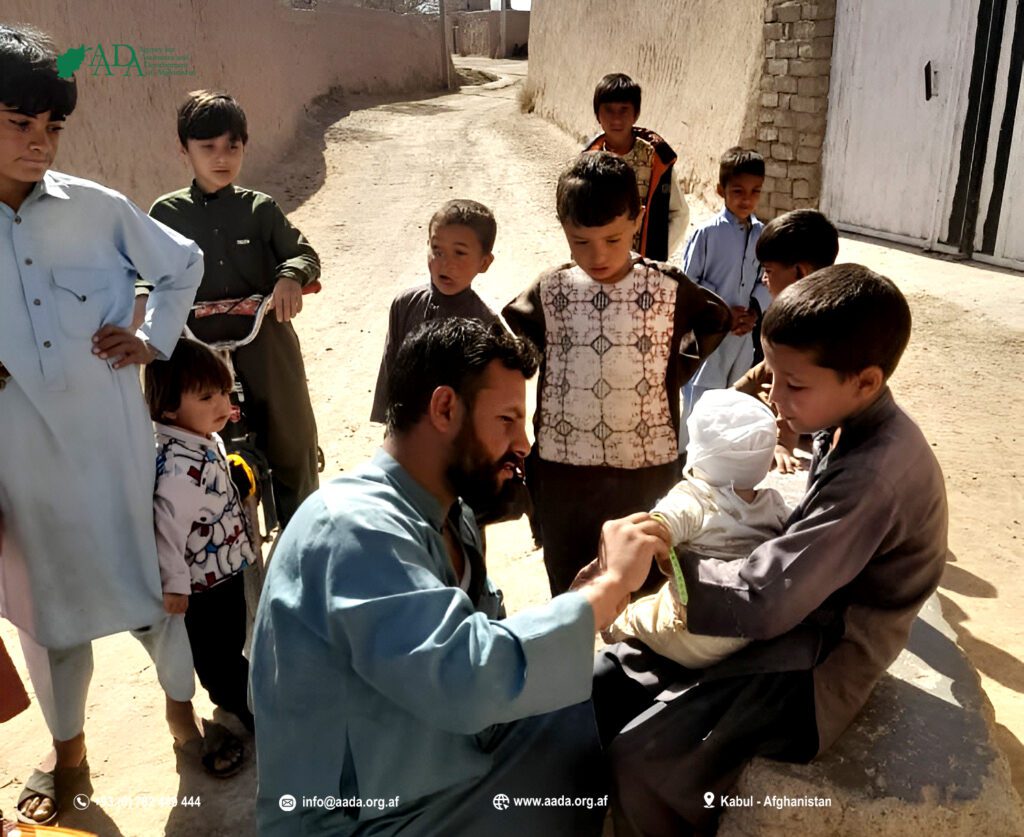
Ghoryan DCC, active screening of under-five children for identifying malnutrition.
The image below captures a critical moment in Ghoryan District,
where a child living with Severe Acute Malnutrition (SAM) and a
disability was identified through community-based nutrition screening. Early
detection and timely referral ensured the child received the specialized care
they urgently needed, demonstrating the life-saving impact of the project and
the importance of community-led nutrition services.
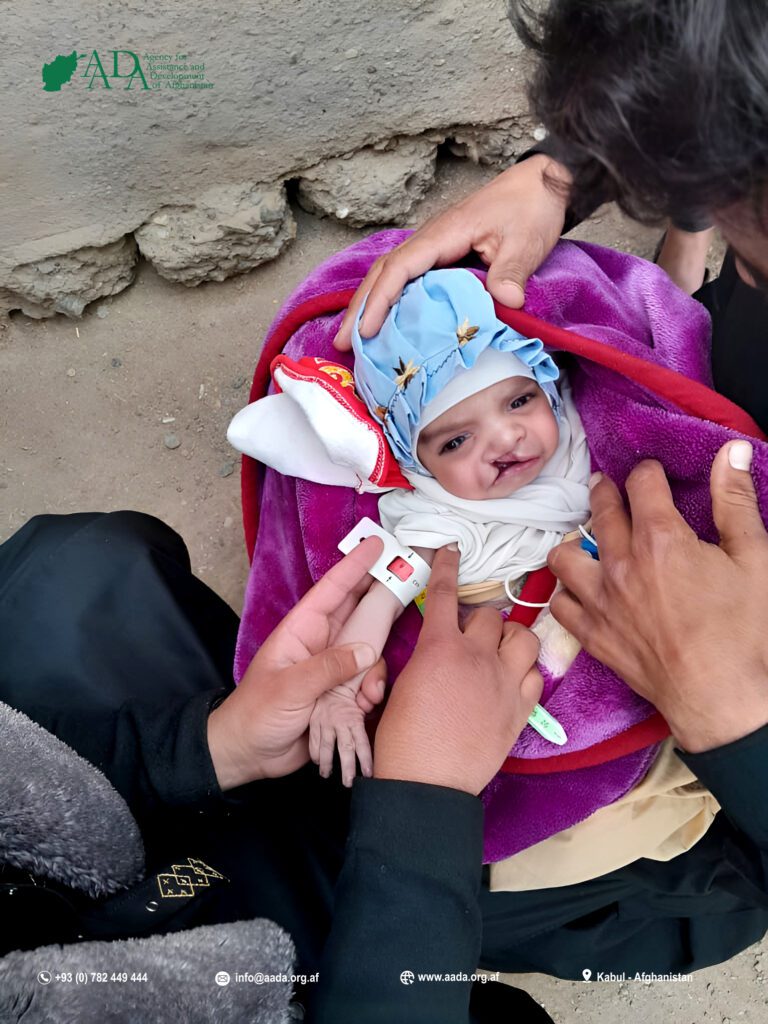
Ghoryan district – identification of a child with severe acute malnutrition and disability.