Project: DAWAM
Health Facility Name: Barpal Basic Health Center (BHC)
Child’s Name: Somayeh
Age: 18 months
Date of Admission: March 22, 2025
Date of Discharge: June 27, 2025
Diagnosis: Moderate Acute Malnutrition (MAM)
Program Type: Nutrition
1. Background and Problem
Somayeh, an 18-month-old girl, was brought to the Barpal BHC nutrition unit by her mother. Upon initial assessment, her weight was 5.5 kg, height 63 cm, and MUAC was 11 cm. Based on IMAM criteria, she was diagnosed with Moderate Acute Malnutrition.
Malnutrition at this stage, if not treated properly, can lead to serious health risks including stunted growth, weakened immunity, and potential progression to Severe Acute Malnutrition (SAM).
2. Intervention Provided:
Somayeh was enrolled in the Targeted Supplementary Feeding Program (TSFP). The following actions were taken:
• Provided Ready-to-Use Supplementary Food (RUSF) according to national protocol.
• Conducted weekly follow-up visits to track Somayeh’s weight, MUAC, and overall condition.
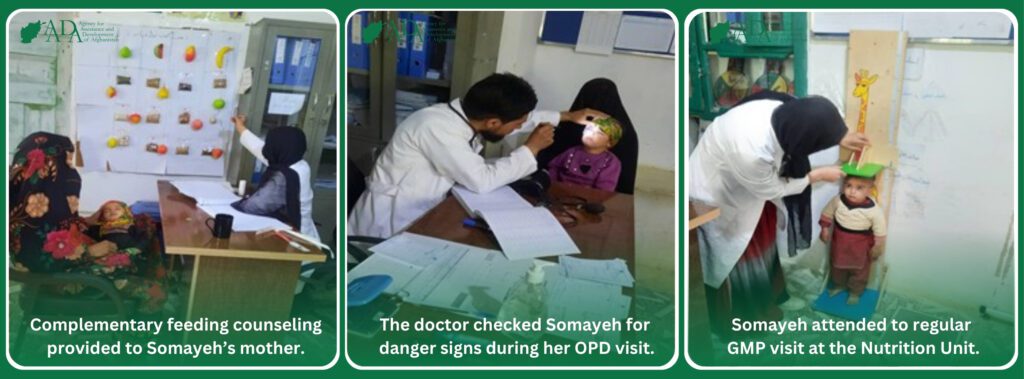
• Her mother received nutrition education, including: Infant and young child feeding (IYCF) practices, Hygiene promotion, Instructions on proper use of RUSF.
• Basic healthcare services were also provided: Vaccinations, Counseling, Danger sign monitoring.
3. Outcomes:
After four weeks of continuous treatment and follow-up:
Indicator Admission Discharge
Weight 5.5 kg 7.5 kg
Height 63 cm 67 cm
MUAC 11 cm 12 cm
Somayeh showed significant improvement and met the discharge criteria from the TSFP program.
4. Key Learnings:
This case highlights the effectiveness of integrated nutrition services when implemented with regular follow-up and caregiver education. Key takeaways include:
• Early identification of MAM allows for timely treatment and reduces risk of deterioration.
• Combining treatment with caregiver education increases the chance of sustained recovery.
• Community-based programs like TSFP are essential for addressing child malnutrition in remote areas.
5. Conclusion:
Somayeh’s case demonstrates that with basic nutritional interventions, caregiver engagement, and consistent monitoring, children with MAM can recover fully. This reinforces the importance of supporting frontline nutrition services in underserved areas like Farsi district.